Ice Bath vs Cold Shower: Which Is Better?
Cold water therapy has become one of the most popular wellness trends in recent years. From elite athletes and fitness enthusiasts to busy professionals looking to improve their wellbeing, more people are embracing the benefits of cold exposure.
But if you're new to cold water therapy, one question often comes up:
Should you choose an ice bath or a cold shower?
Both methods expose the body to cold temperatures and can offer a range of physical and mental benefits. However, there are some important differences between the two.
In this guide, we'll compare ice baths and cold showers side by side to help you decide which option is right for your lifestyle, recovery goals and wellness routine.
What Is A Cold Shower?
A cold shower involves showering using cold water, usually at the lowest temperature available from your domestic water supply.
For most people in the UK, cold shower temperatures typically range between 8°C and 15°C depending on the season and location.
Cold showers are simple, accessible and require no specialist equipment, making them a popular introduction to cold water therapy.
What Is An Ice Bath?
An ice bath, also known as a cold plunge, involves immersing a significant portion of your body in cold water for a short period of time.
Unlike a cold shower, where water flows over the skin, an ice bath surrounds your body with cold water, creating a much greater cooling effect.
Modern ice baths often feature built-in chillers, circulation systems and insulation to maintain a precise temperature and provide a consistent cold water therapy experience.
Ice Bath vs Cold Shower: The Key Differences
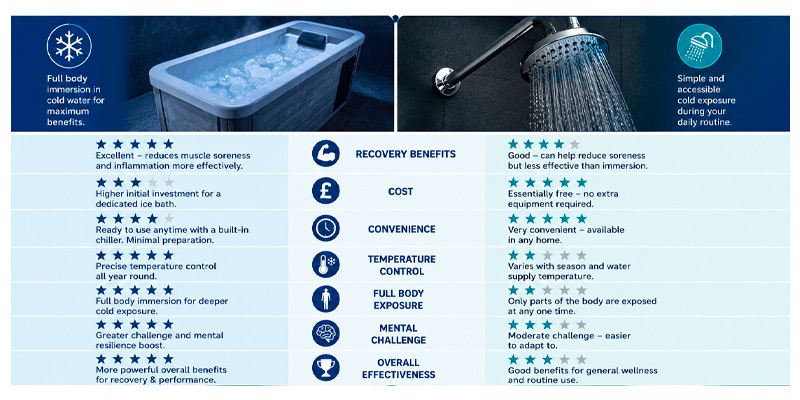
Level of Cold Exposure
One of the biggest differences between an ice bath and a cold shower is the amount of cold exposure your body receives.
With a cold shower, only the areas directly under the water stream are exposed to the cold temperature at any given moment.
In an ice bath, much of your body is fully immersed in cold water simultaneously.
This full-body immersion generally creates a stronger physiological response, which is why many athletes and recovery specialists prefer cold plunges.
Winner: Ice Bath
Muscle Recovery
If your primary goal is post-exercise recovery, an ice bath typically has the advantage.
Cold water immersion helps reduce inflammation and may decrease muscle soreness after intense physical activity.
Because the body is fully submerged, the cooling effect is more uniform and effective than a cold shower.
Many professional sports teams and athletes use ice baths specifically to support recovery between training sessions and competitions.
Winner: Ice Bath
Convenience
Cold showers are undoubtedly the easiest option.
Almost everyone already has access to a shower, and there is no additional equipment required.
You can simply turn the temperature down and begin immediately.
An ice bath requires dedicated equipment or preparation, although permanent cold plunge tubs eliminate much of the effort involved.
Winner: Cold Shower
Temperature Consistency
One challenge with cold showers is that temperatures vary depending on the season, plumbing system and local water supply.
An ice bath with a built-in chiller allows precise temperature control all year round.
This consistency makes it easier to follow a structured cold therapy routine.
Winner: Ice Bath
Mental Challenge
Both methods require mental discipline.
However, many people find full-body immersion significantly more challenging than standing under a cold shower.
The initial shock of entering an ice bath can feel intense, but successfully completing a cold plunge often creates a greater sense of achievement and resilience.
Winner: Ice Bath
Cost
Cold showers are essentially free.
An ice bath represents a larger investment, particularly if you choose a premium cold plunge tub with built-in chilling and filtration systems.
However, many users view this investment as worthwhile because of the convenience, comfort and enhanced effectiveness.
Winner: Cold Shower
Comparison Table
|
Feature |
Cold Shower |
Ice Bath |
|
Cost |
Excellent |
Good |
|
Convenience |
Excellent |
Good |
|
Recovery Benefits |
Good |
Excellent |
|
Temperature Control |
Fair |
Excellent |
|
Full Body Exposure |
Limited |
Excellent |
|
Mental Challenge |
Good |
Excellent |
|
Long-Term Wellness Routine |
Good |
Excellent |
Benefits Shared By Both
Regardless of which option you choose, both cold showers and ice baths may provide benefits such as:
- Improved circulation
- Reduced muscle soreness
- Increased alertness
- Enhanced mood
- Better mental resilience
- Potential immune system support
- Improved recovery after exercise
For many people, the most important factor is consistency. A regular cold water therapy routine is often more beneficial than occasional extreme exposure.
Why More People Are Choosing Ice Baths
While cold showers remain a great starting point, dedicated ice baths have become increasingly popular because they provide a more controlled and immersive experience.
A purpose-built ice bath offers:
- Consistent temperatures
- Full-body immersion
- Greater recovery benefits
- Improved comfort
- Better hygiene and water management
- Easier integration into a long-term wellness routine
Instead of relying on seasonal water temperatures or bags of ice, a modern cold plunge tub can be ready whenever you need it.
Is A Portable Ice Bath Enough?
Portable ice baths can be an affordable introduction to cold plunging, but they often come with limitations.
Many require frequent filling and emptying, manual temperature management and regular cleaning.
For people who plan to use cold water therapy several times per week, a permanent ice bath with a built-in chiller offers a significantly more convenient experience.
Our Recommendation
If you're completely new to cold water therapy, starting with cold showers can be an excellent way to build confidence and experience some of the benefits of cold exposure.
However, if your goal is to maximise recovery, enjoy consistent temperatures and make cold water therapy a regular part of your wellness routine, a dedicated ice bath is generally the superior option.
The Alaska Ice Bath from Premier Hot Tubs combines a built-in chiller, circulation system, massage jets and premium construction to provide a luxury cold plunge experience at home.
You can view the Alaska Ice Bath here:
https://www.premierhottubs.co.uk/hot-tubs/alaska-single-person-ice-bath/333kice
Final Verdict
Cold showers and ice baths both have their place within a healthy lifestyle.
Cold showers are accessible, affordable and easy to incorporate into a daily routine. Ice baths, however, provide a deeper level of cold exposure, more effective recovery support and greater long-term convenience.
For occasional cold therapy, a cold shower may be all you need.
For serious recovery, performance and wellness enthusiasts, an ice bath is often the better investment.