
Ice Bath Recovery For Runners: Can Cold Water Therapy Help You Recover Faster?
Whether you're training for your first 5K, preparing for a marathon or simply enjoy regular runs to stay fit, recovery plays a vital role in your performance and long-term enjoyment of running.
Every run places stress on the body. Muscles, joints and connective tissues all experience strain during training, particularly when running longer distances, increasing mileage or tackling challenging terrain.
This is why many runners are turning to ice baths and cold water therapy as part of their recovery routine.
But do ice baths actually help runners recover faster?
In this guide, we'll explore the potential benefits of cold water therapy for runners, when to use an ice bath and how to incorporate cold plunging into your training schedule.
Why Recovery Is So Important For Runners
Running is one of the most accessible forms of exercise, but it is also highly repetitive.
Every stride creates impact forces that travel through:
- Feet
- Ankles
- Calves
- Knees
- Hips
- Lower back
Over time, these repeated impacts can lead to muscle soreness, fatigue and stiffness.
Recovery is the process that allows your body to repair, adapt and become stronger after training.
Without adequate recovery, runners may experience:
- Persistent soreness
- Reduced performance
- Increased fatigue
- Higher injury risk
- Lack of motivation
This is why many runners place as much importance on recovery as they do on training itself.
Why Do Runners Use Ice Baths?
Cold water therapy has been used by athletes for decades.
The principle is simple.
When the body is immersed in cold water, blood vessels constrict and inflammatory responses may be reduced. After leaving the water, circulation increases as the body warms up again.
Many runners use ice baths to help:
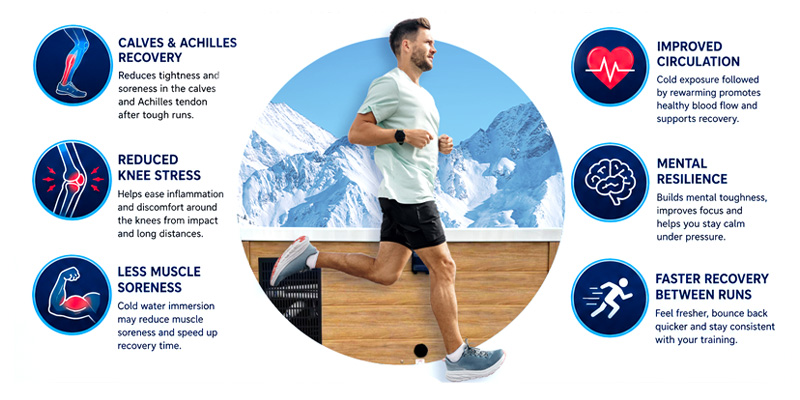
- Reduce muscle soreness
- Improve recovery between runs
- Support circulation
- Reduce feelings of fatigue
- Maintain training consistency
For runners completing high weekly mileage, these benefits can be particularly valuable.
Can Ice Baths Reduce Muscle Soreness?
One of the main reasons runners use ice baths is to help manage delayed onset muscle soreness (DOMS).
DOMS typically develops 24 to 72 hours after a challenging run and can leave muscles feeling stiff and tender.
This is especially common after:
- Long runs
- Hill sessions
- Speed work
- Race events
- Increasing training volume
Cold water immersion may help reduce soreness and improve comfort during the recovery period.
Many runners find they feel fresher and more mobile following a cold plunge session.
Ice Baths And Inflammation
Running creates small amounts of muscle damage, which is a normal part of adaptation and improvement.
This process often leads to inflammation within the muscles and surrounding tissues.
Cold exposure may help reduce some of these inflammatory responses, which is one reason ice baths have become so popular among endurance athletes.
For runners training multiple times per week, managing inflammation can play an important role in maintaining consistency.
Benefits For Marathon Training
Recovery becomes increasingly important as race distances increase.
Marathon training often includes:
- Long weekly runs
- Tempo sessions
- Interval training
- Strength work
- High training volumes
As mileage increases, so does the need for effective recovery.
Many marathon runners incorporate ice baths after their longest sessions to help minimise soreness and prepare for upcoming training.
Cold water therapy can be particularly useful during the final months leading up to race day when training loads are at their highest.
Can Ice Baths Help Prevent Running Injuries?
No recovery method can completely prevent injuries.
However, effective recovery may help reduce some of the factors that contribute to overuse injuries, including:
- Excessive fatigue
- Persistent inflammation
- Reduced mobility
- Muscle tightness
When combined with proper training, nutrition and sleep, cold water therapy can form part of a comprehensive recovery strategy.
The Mental Benefits Of Cold Water Therapy
Running is as much a mental challenge as a physical one.
Many runners report that cold plunging helps improve:
- Mental toughness
- Discipline
- Focus
- Stress management
- Resilience
Stepping into cold water requires controlled breathing and composure, qualities that also prove valuable during challenging runs and races.
Many runners enjoy the sense of achievement that comes from completing a cold plunge session.
When Should Runners Use An Ice Bath?
After Long Runs
Long runs place significant demands on the body.
An ice bath can help runners recover more comfortably after covering extended distances.
After Hard Training Sessions
Speed sessions and hill workouts often create more muscle soreness than easy runs.
Cold water therapy can be particularly beneficial after these demanding workouts.
After Races
Many runners use ice baths after:
- Parkruns
- 10Ks
- Half marathons
- Marathons
- Trail races
The goal is to support recovery and reduce post-race soreness.
During High-Volume Training Blocks
When training frequency and mileage increase, recovery becomes even more important.
Cold plunges can help runners feel fresher between sessions.
What Is The Best Ice Bath Temperature For Runners?
Most runners will benefit from temperatures between:
10°C and 15°C
This range provides an effective cold exposure without becoming unnecessarily extreme.
Many experienced runners prefer around 10°C to 12°C following particularly demanding training sessions.
How Long Should Runners Stay In An Ice Bath?
For most runners:
3 to 10 minutes
is sufficient.
Beginners should start with shorter sessions and gradually build confidence.
Longer sessions are rarely necessary.
Consistency is more important than duration.
Why A Dedicated Ice Bath Is Better Than A Cold Shower
Cold showers can provide some benefits, but they do not offer the same level of immersion as a dedicated ice bath.
A purpose-built cold plunge tub provides:
- Full body immersion
- Consistent temperatures
- Greater comfort
- Better recovery support
- Improved convenience
Many runners find that having an ice bath ready whenever they return from training helps them maintain a regular recovery routine.
The Alaska Ice Bath: Perfect For Runners
If you're serious about recovery, the Alaska Ice Bath from Premier Hot Tubs provides a premium cold water therapy experience at home.
Key features include:
- Built-in chiller
- Water circulation system
- Quadruple insulation
- Thermal cover
- Ergonomic design
- Premium acrylic construction
Unlike makeshift ice baths that require constant preparation, the Alaska remains ready whenever you finish a run.
You can learn more about the Alaska Ice Bath here:
https://www.premierhottubs.co.uk/hot-tubs/alaska-single-person-ice-bath/333kice
Frequently Asked Questions
Do professional runners use ice baths?
Yes. Many elite runners and endurance athletes use cold water therapy as part of their recovery strategy.
Should I take an ice bath after every run?
Not necessarily. Many runners reserve ice baths for long runs, hard workouts and race days.
Is an ice bath better than a cold shower?
For recovery purposes, full-body immersion generally provides a stronger cold exposure than a cold shower.
How soon after running should I take an ice bath?
Many runners choose to cold plunge within one to two hours of finishing a run.
Final Thoughts
Running places significant demands on the body, especially during periods of intensive training.
While ice baths are not a miracle solution, many runners find that cold water therapy helps reduce soreness, improve recovery and support consistent training.
Whether you're preparing for your first race or chasing a marathon personal best, incorporating an ice bath into your recovery routine could help you feel fresher, recover more comfortably and get back out on the road sooner.