
Ice Bath Before Or After Exercise? The Best Time For Cold Water Therapy
If you've started exploring cold water therapy, you've probably come across conflicting advice about when to take an ice bath.
Some people swear by a cold plunge before a workout to boost focus and energy, while others use ice baths after exercise to support recovery and reduce muscle soreness.
So, which approach is best?
Should you take an ice bath before or after exercise?
The answer depends on your goals. However, for most people, cold water therapy is generally most beneficial after exercise rather than before it.
In this guide, we'll explain the differences, explore the potential benefits of both approaches, and help you decide when to incorporate an ice bath into your fitness routine.
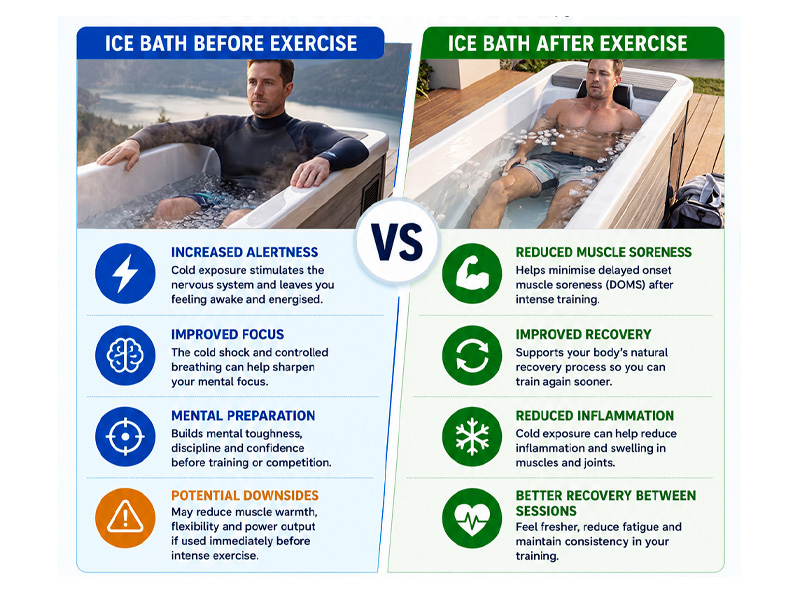
The Short Answer
For most people:
An ice bath is best used after exercise.
Post-workout cold water therapy may help:
- Reduce muscle soreness
- Improve recovery
- Minimise inflammation
- Support circulation
- Help you feel fresher between training sessions
While some athletes use ice baths before exercise to improve alertness and mental focus, the majority of recovery-related benefits are achieved after training.
Why People Use Ice Baths After Exercise
The primary reason most people use ice baths is recovery.
Exercise places stress on the body. Whether you're lifting weights, running, cycling, playing golf or participating in team sports, your muscles experience microscopic damage during training.
This process is completely normal and is part of how the body adapts and becomes stronger.
However, it can also lead to:
- Muscle soreness
- Stiffness
- Fatigue
- Temporary inflammation
Cold water therapy is often used to help manage these effects and support the recovery process.
Benefits Of An Ice Bath After Exercise
Reduced Muscle Soreness
One of the most widely recognised benefits of cold water immersion is its ability to help reduce post-exercise soreness.
Many athletes use ice baths after intense workouts to minimise delayed onset muscle soreness (DOMS), which typically develops 24 to 72 hours after exercise.
This can be particularly helpful after:
- Long runs
- Strength training sessions
- High-intensity workouts
- Competitive sporting events
Improved Recovery Between Training Sessions
If you train regularly, recovery becomes increasingly important.
An effective recovery routine may help you maintain consistency, perform better and feel fresher throughout the week.
Many people find that ice baths become a valuable recovery tool during periods of intense training.
Reduced Inflammation
Exercise creates temporary inflammation within muscles and connective tissues.
Cold exposure causes blood vessels to constrict, which may help reduce inflammatory responses and support the recovery process.
Mental Refreshment
Many people report feeling energised and mentally refreshed after an ice bath.
The combination of cold exposure and endorphin release can create a sense of alertness and wellbeing following exercise.
Can You Take An Ice Bath Before Exercise?
Yes.
Some people deliberately use cold water therapy before exercise.
However, the goals are usually different.
Instead of focusing on recovery, pre-workout cold plunges are typically used to:
- Increase alertness
- Improve focus
- Boost energy levels
- Enhance mental readiness
The shock of cold water exposure can leave you feeling awake and energised, which some athletes find beneficial before training or competition.
Potential Benefits Of An Ice Bath Before Exercise
Increased Alertness
Cold exposure stimulates the nervous system and can produce an immediate feeling of wakefulness.
Many people compare the effect to drinking a strong cup of coffee.
Improved Mental Focus
Cold plunges require controlled breathing and concentration.
Some users find that this creates a focused mindset before training.
Mental Preparation
For competitive athletes, cold water therapy can become part of a pre-event routine that helps build confidence and mental resilience.
Potential Drawbacks Of Using An Ice Bath Before Exercise
Although cold plunges before exercise can provide certain benefits, there are some potential drawbacks to consider.
Reduced Muscle Warmth
Before exercise, muscles generally perform best when they are warm and supple.
An ice bath temporarily lowers muscle temperature, which may reduce flexibility and explosiveness if followed immediately by intense activity.
Temporary Reduction In Power Output
Some studies suggest that cold exposure immediately before exercise may temporarily reduce strength, power and performance.
This is one reason why many athletes prefer to use ice baths after exercise rather than before it.
Increased Risk Of Feeling Stiff
Some individuals report feeling tighter or less mobile immediately after cold exposure.
This can be counterproductive before activities that require speed, mobility or power.
What About Strength Training?
The relationship between ice baths and strength training is particularly interesting.
Some research suggests that using ice baths immediately after resistance training may reduce certain muscle-building adaptations.
This doesn't mean strength athletes should avoid cold water therapy altogether, but it does mean timing can matter.
Many strength-focused athletes choose to:
- Use ice baths several hours after training
- Reserve ice baths for particularly demanding sessions
- Use cold plunges on recovery days
For general fitness, recovery and wellbeing, however, cold water therapy remains a popular recovery tool.
What About Running?
For runners, the answer is usually more straightforward.
Long-distance running places significant stress on muscles, joints and connective tissues.
Many runners use ice baths after:
- Long runs
- Interval sessions
- Hill training
- Half marathons
- Marathons
The goal is typically to reduce soreness and improve recovery between training sessions.
What About Golf?
Golfers are increasingly embracing cold water therapy as part of their recovery routine.
After a long day on the course, an ice bath may help reduce stiffness in the:
- Lower back
- Hips
- Knees
- Shoulders
Many golfers also enjoy the mental benefits associated with regular cold plunging.
The Best Time To Take An Ice Bath After Exercise
For most people, an ice bath can be taken:
Within 30 minutes to 2 hours after exercise.
This is the most common recovery window.
However, there is no strict rule.
The most important factor is incorporating cold water therapy into a routine that is practical and sustainable.
What Temperature Should An Ice Bath Be?
Most people will benefit from temperatures between:
10°C and 15°C
This range provides effective cold exposure without becoming unnecessarily extreme.
If you're new to cold plunging, start towards the warmer end of this range and gradually build tolerance.
How Long Should You Stay In An Ice Bath?
For most people:
3 to 10 minutes
is sufficient.
Beginners should start with shorter sessions and gradually increase duration over time.
Longer sessions are rarely necessary.
Why A Dedicated Ice Bath Makes Recovery Easier
While some people use a bathtub filled with ice, maintaining a consistent temperature can be difficult and time-consuming.
A dedicated cold plunge tub offers:
- Reliable temperature control
- Built-in chilling systems
- Improved hygiene
- Better insulation
- Greater convenience
This makes it easier to enjoy cold water therapy whenever you finish a workout.
The Alaska Ice Bath: Ready Whenever You Finish Training
For anyone looking to make cold water therapy part of their regular recovery routine, the Alaska Ice Bath from Premier Hot Tubs offers a premium home solution.
Featuring:
- Built-in chiller
- Water circulation system
- Quadruple insulation
- Thermal cover
- Ergonomic design
- Premium acrylic construction
The Alaska Ice Bath remains ready whenever you finish training, helping you enjoy a consistent cold plunge experience without the need for bags of ice or constant preparation.
Learn more about the Alaska Ice Bath here:
https://www.premierhottubs.co.uk/hot-tubs/alaska-single-person-ice-bath/333kice
Frequently Asked Questions
Is it better to ice bath before or after a workout?
For most people, an ice bath is more beneficial after a workout because it supports recovery and helps reduce muscle soreness.
Can I take an ice bath before running?
Yes, but many runners prefer cold water therapy after running rather than before.
Does an ice bath improve athletic performance?
Ice baths are generally used to support recovery rather than directly improve performance.
How long after exercise should I take an ice bath?
Most people use an ice bath within 30 minutes to 2 hours after training.
Final Verdict
If your primary goal is recovery, an ice bath is generally most effective after exercise.
Post-workout cold water therapy may help reduce soreness, improve recovery and prepare your body for future training sessions.
While some athletes enjoy cold plunges before exercise for alertness and mental focus, the majority of recovery-related benefits are achieved after training.
For most people, the simple answer is:
Train first. Cold plunge afterwards.