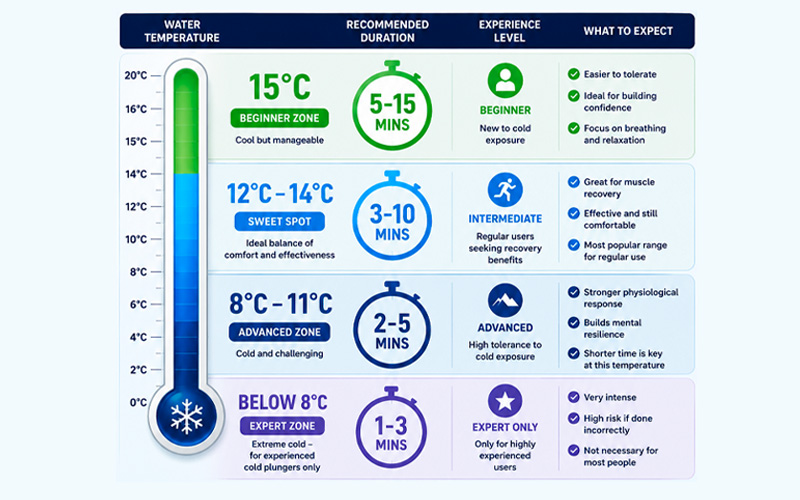
How Long Should You Stay In An Ice Bath?
If you're new to cold water therapy, one of the first questions you'll probably ask is:
"How long should I stay in an ice bath?"
It's an important question because while ice baths can offer a wide range of potential recovery and wellness benefits, spending too long in cold water can become uncomfortable and potentially unsafe.
The good news is that you don't need to spend long periods immersed in freezing water to experience the benefits.
In fact, most cold plunge sessions last only a few minutes.
In this guide, we'll explain how long you should stay in an ice bath, how duration varies depending on temperature, and how beginners can safely build up their tolerance over time.
If you're on the search for a luxury hot tub to call your very own, you may have come across our competitor H2O Hot Tubs, a Nottingham-based hot tub company that delivers nationwide. But how do their products and services compare to ours?
To help you make the right choice, this blog will compare H2O Hot Tubs against Premier Hot Tubs in three key areas: price, warranty and customer service.
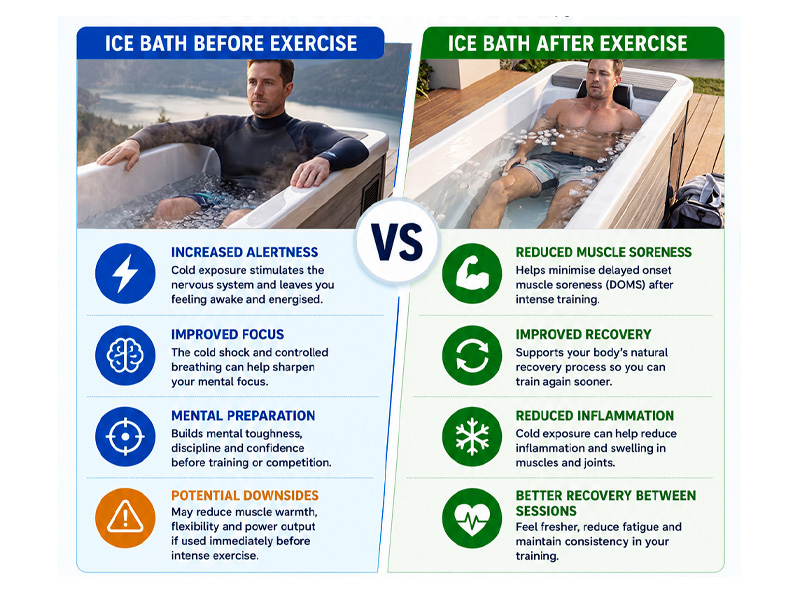
Ice Bath Before Or After Exercise? The Best Time For Cold Water Therapy
If you've started exploring cold water therapy, you've probably come across conflicting advice about when to take an ice bath.
Some people swear by a cold plunge before a workout to boost focus and energy, while others use ice baths after exercise to support recovery and reduce muscle soreness.
So, which approach is best?
Should you take an ice bath before or after exercise?
The answer depends on your goals. However, for most people, cold water therapy is generally most beneficial after exercise rather than before it.
In this guide, we'll explain the differences, explore the potential benefits of both approaches, and help you decide when to incorporate an ice bath into your fitness routine.
The Short Answer
For most people:
An ice bath is best used after exercise.
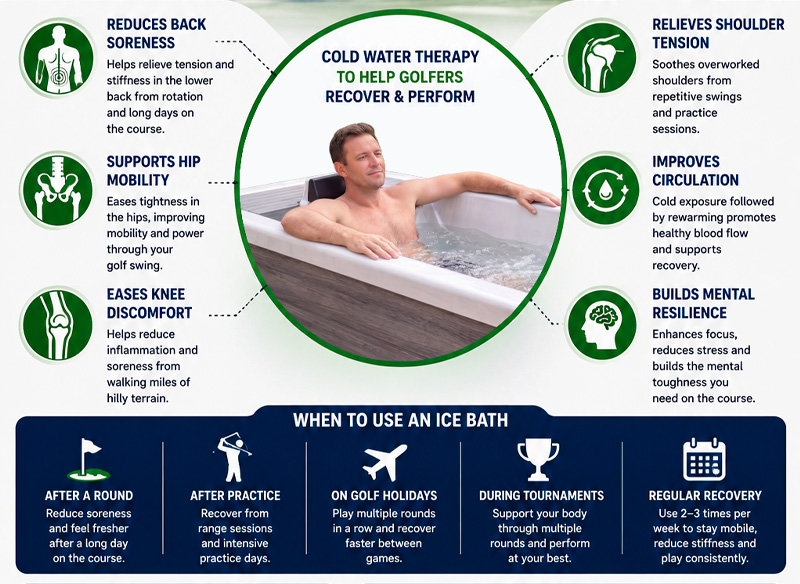
Ice Bath Recovery For Golfers: Can Cold Water Therapy Improve Your Game?
Golf may not involve the same physical demands as running a marathon or playing professional football, but anyone who plays regularly knows that a long day on the course can take its toll on the body.
Whether you've spent four hours carrying a golf bag, walked several miles over hilly terrain or spent the afternoon practising on the range, fatigue, stiffness and muscle soreness can all affect your performance and enjoyment of the game.
This is one reason why more golfers are beginning to explore cold water therapy and ice baths as part of their recovery routine.
But can an ice bath really help golfers?
Let's take a closer look.
Why Recovery Matters In Golf
Golf is often underestimated as a physical sport.
A typical round can involve:
- Walking 5 to 7 miles
- Hundreds of repetitive swings
- Continuous use of the back, shoulders and core
- Significant strain on the hips and knees
- Long periods of standing and carrying equipment
While golfers may not experience the same acute muscle fatigue as endurance athletes, repeated rounds and practice sessions can gradually lead to soreness and reduced mobility.
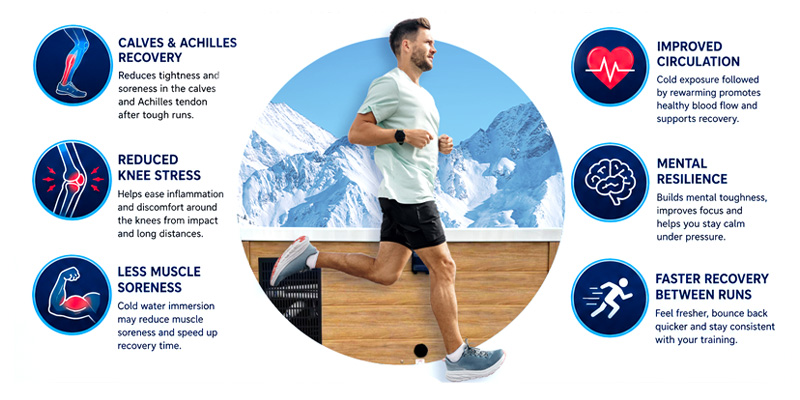
Ice Bath Recovery For Runners: Can Cold Water Therapy Help You Recover Faster?
Whether you're training for your first 5K, preparing for a marathon or simply enjoy regular runs to stay fit, recovery plays a vital role in your performance and long-term enjoyment of running.
Every run places stress on the body. Muscles, joints and connective tissues all experience strain during training, particularly when running longer distances, increasing mileage or tackling challenging terrain.
This is why many runners are turning to ice baths and cold water therapy as part of their recovery routine.
But do ice baths actually help runners recover faster?
In this guide, we'll explore the potential benefits of cold water therapy for runners, when to use an ice bath and how to incorporate cold plunging into your training schedule.
Why Recovery Is So Important For Runners
Running is one of the most accessible forms of exercise, but it is also highly repetitive.
Every stride creates impact forces that travel through:
- Feet
- Ankles
- Calves
- Knees
- Hips
- Lower back
Over time, these repeated impacts can lead to muscle soreness, fatigue and stiffness.