
Best Ice Bath Temperature: The Complete Guide
One of the most common questions people ask when starting cold water therapy is:
"What is the best temperature for an ice bath?"
The answer depends on your experience level, comfort and recovery goals. While many people assume colder is always better, that isn't necessarily true.
In fact, extremely cold water can be uncomfortable, difficult to tolerate and, in some cases, counterproductive. Finding the right balance is the key to enjoying the benefits of cold water therapy safely and effectively.
In this guide, we'll explain the ideal ice bath temperature range, how long you should stay in an ice bath at different temperatures, and how to find the sweet spot for your cold plunge routine.
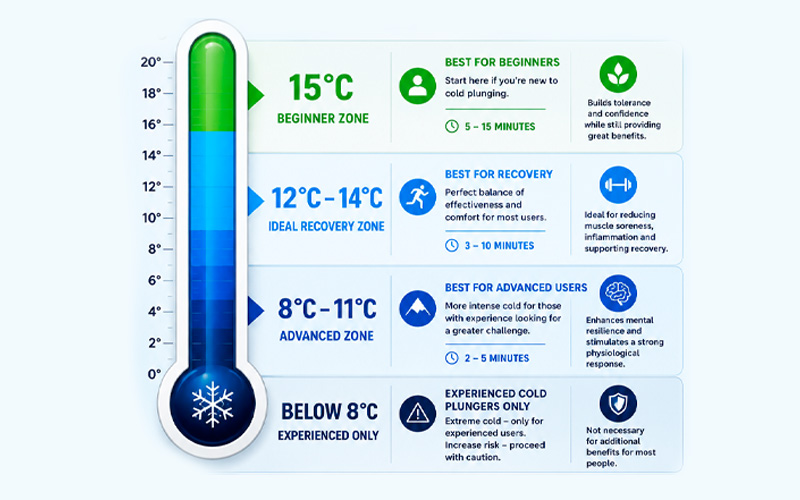
What Temperature Should An Ice Bath Be?
For most people, the ideal ice bath temperature is:
10°C to 15°C
This temperature range is cold enough to trigger the physiological responses associated with cold water therapy while remaining manageable for most users.
Many experts recommend beginners start towards the warmer end of this range before gradually reducing the temperature as they become more comfortable.
Quick Temperature Guide
|
Water Temperature |
Experience Level |
|
15°C |
Beginner |
|
12°C - 14°C |
Intermediate |
|
8°C - 11°C |
Advanced |
|
Below 8°C |
Experienced Users Only |
For most people, there is little additional benefit in going dramatically colder than 10°C.
Consistency is generally more important than extreme temperatures.
Why Temperature Matters
When you enter cold water, your body responds immediately.
The cold causes blood vessels near the skin to constrict, reducing blood flow to the extremities and directing circulation towards the body's core.
This response is believed to contribute to many of the benefits associated with cold water therapy, including:
- Reduced muscle soreness
- Improved circulation
- Increased alertness
- Enhanced recovery
- Improved mental resilience
If the water isn't cold enough, these responses may be less pronounced.
If the water is excessively cold, the experience can become unnecessarily stressful and difficult to maintain as a regular habit.
The goal is to find a temperature that is effective but sustainable.
Is Colder Always Better?
No.
This is perhaps the biggest misconception surrounding ice baths.
Many people believe they need near-freezing water to experience meaningful results.
In reality, research suggests that water temperatures between 10°C and 15°C are sufficient for most recovery and wellness purposes.
A temperature of 4°C may sound impressive, but it is significantly more challenging and often offers little practical advantage for the average user.
Most people are far more likely to maintain a regular cold water therapy routine when the experience remains challenging but manageable.
Best Ice Bath Temperature For Beginners
If you're new to cold plunging, start at approximately:
15°C
This temperature is cold enough to provide the benefits of cold water therapy while allowing your body time to adapt.
Your first few sessions should be relatively short, typically between 30 seconds and 2 minutes.
As your confidence grows, you can gradually reduce the temperature or increase the duration of your sessions.
Many beginners make the mistake of going too cold too quickly.
Building tolerance gradually usually leads to a more enjoyable and sustainable experience.
Best Ice Bath Temperature For Recovery
For muscle recovery and post-exercise soreness, most experts recommend:
10°C to 12°C
This range is commonly used by athletes and sports recovery professionals.
The water is cold enough to help reduce inflammation and support recovery while remaining tolerable for several minutes of immersion.
This temperature range is often considered the sweet spot for balancing effectiveness and comfort.
Best Temperature For Mental Resilience
Many people use cold water therapy to improve discipline, focus and mental resilience.
For these users, temperatures between:
8°C and 12°C
are often preferred.
The colder water creates a greater psychological challenge while still remaining within a controlled and manageable range.
However, it's important to prioritise safety over intensity.
How Long Should You Stay In An Ice Bath?
The colder the water, the shorter the recommended session.
General guidance is:
|
Temperature |
Recommended Time |
|
15°C |
5-15 minutes |
|
12°C |
3-10 minutes |
|
10°C |
3-8 minutes |
|
8°C |
2-5 minutes |
For most people, there is rarely a need to exceed 10 to 15 minutes.
Quality and consistency are more important than endurance.
Why Consistent Temperature Is Important
One challenge with traditional DIY ice baths is maintaining a reliable temperature.
As soon as you enter the water, the temperature begins to rise. External weather conditions can also affect the water significantly.
This creates an inconsistent experience.
A dedicated cold plunge tub with a built-in chiller helps maintain a stable temperature throughout your session, ensuring you receive the same experience every time.
Consistency allows you to track progress, build a routine and optimise your cold water therapy practice.
Why A Built-In Chiller Makes A Difference
Many people begin with a bathtub or portable ice bath.
While these can be effective, they often require:
- Buying bags of ice
- Frequent refilling
- Manual temperature monitoring
- Additional cleaning
A premium ice bath with an integrated chiller removes these inconveniences.
The water remains at your chosen temperature and is ready whenever you need it.
The Alaska Ice Bath from Premier Hot Tubs features a built-in chiller, circulation system and advanced insulation, allowing you to enjoy a consistent cold plunge experience without the hassle of manually managing the temperature.
You can view the Alaska Ice Bath here:
https://www.premierhottubs.co.uk/hot-tubs/alaska-single-person-ice-bath/333kice
Common Ice Bath Temperature Mistakes
Going Too Cold Too Soon
Beginners often assume colder is better.
Starting at a more manageable temperature helps build confidence and consistency.
Staying In Too Long
More time doesn't always mean better results.
Excessively long sessions can increase discomfort and risk.
Chasing Extreme Temperatures
Social media has popularised near-freezing ice baths, but these are unnecessary for most users.
The majority of benefits can be achieved at much more practical temperatures.
Inconsistent Temperature Control
If your water temperature changes significantly from session to session, it becomes difficult to develop a structured routine.
Final Thoughts
The best ice bath temperature for most people falls between 10°C and 15°C.
This range offers an excellent balance between comfort, safety and effectiveness, making it ideal for recovery, wellness and regular cold water therapy.
While experienced users may occasionally choose colder temperatures, consistency is far more important than extremes.
If you're serious about incorporating cold water therapy into your lifestyle, investing in an ice bath with reliable temperature control can make the experience significantly more convenient and enjoyable.
Start gradually, stay consistent and focus on building a sustainable routine that works for you.
Read our blog on how long you should stay in an ice bath here: https://www.premierhottubs.co.uk/latest-news/post/how-long-should-you-stay-in-an-ice-bath